Ringba Review: Built for Pay-Per-Call, Not for Everyone
Ringba is not trying to be the most universal call tracking platform on the market.
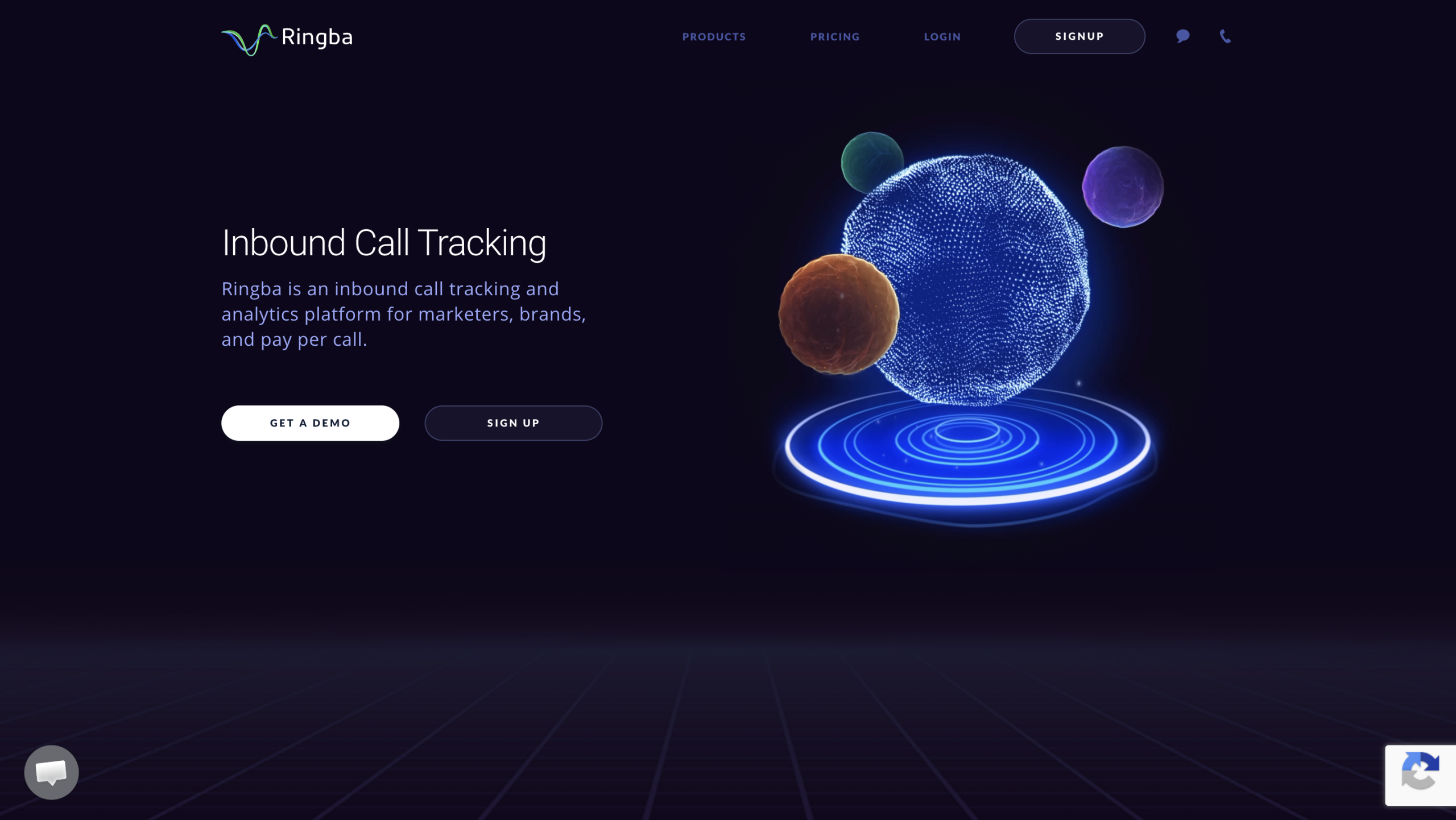
That is the first thing buyers should understand before signing up. Ringba is positioned as an inbound call tracking and analytics platform for marketers, brands, and pay-per-call businesses, with a product stack built around routing, partner management, call monetization, and real-time operational control. If your business depends on buyers, sellers, call flows, yield optimization, and performance-based call routing, that focus is a strength. If you mainly want lightweight attribution for a local business or a simple marketing dashboard, Ringba may feel more specialized than you need.
What is Ringba?
Ringba is a call tracking platform designed for inbound call businesses that need more than basic source attribution. Its public product pages emphasize call tracking, IVR, Ring Trees, white label capabilities, Instant Caller Profiles, call flows, partner users, and real-time routing. The company also highlights an open framework with APIs, plus integrations such as Google Ads, Facebook Ads, Jornaya, TrustedForm, Zapier, Make, and custom data connections.
That positioning matters because Ringba is strongest when calls are part of a revenue operation, not just a reporting layer. On its call tracking page, Ringba says it was built from the ground up for performance marketers and pay per call, and it emphasizes buyer/seller management, routing rules, capping, attribution data, and call-flow optimization. In other words, this is less of a “marketing-friendly call analytics tool” and more of an operations-grade platform for teams that live inside inbound call traffic.
Quick verdict
Ringba is a strong fit for pay-per-call operators, affiliate-driven call businesses, lead marketplaces, and agencies that need advanced routing logic. Its biggest strengths are call monetization controls, Ring Trees, predictive routing, revenue recovery, open integrations, and a pricing model that is public and usage-aware rather than fully quote-gated.
Its biggest limitation is that it is not the cleanest fit for every type of buyer. Based on Ringba’s public positioning and feature packaging, teams looking for broad conversation intelligence, mainstream SMB simplicity, or a more marketing-first user experience may find tools like CallRail, CTM, or Invoca easier to map to their needs. That is an inference from Ringba’s official product emphasis on routing, partner operations, and pay-per-call infrastructure rather than broader sales and conversation workflows.
Key features that actually matter
| Feature | What it does | Why it matters |
| Call Tracking | Tracks inbound calls and attribution data | Core reporting and source visibility |
| Call Flows | Automates call routing logic | Useful when call handling gets complex |
| Ring Trees | Pings eligible buyers/targets to find the best match or bid | Core for pay-per-call economics |
| Predictive Routing | Improves routing based on value or expected performance | Helps maximize yield |
| Revenue Recovery | Re-routes calls that end too early | Helps recover monetization opportunities |
| Instant Caller Profile | Pulls real-time caller enrichment data | Supports screening and routing decisions |
| White Label | Lets agencies or networks brand the platform | Useful for multi-client or network models |
The most important differentiator here is Ring Trees. Ringba’s support documentation explains that Ring Tree Targets can ping eligible targets at the same time to identify the highest bidder for the call, while its pricing page shows Ring Trees unlocking on Professional and above. Enterprise adds Real-Time Bidding and Ping/Post Call Trading, which pushes Ringba deeper into marketplace and call-trading territory than most standard call tracking tools.
Revenue Recovery is another feature worth calling out because it is more operational than cosmetic. Ringba says the feature can reroute a call to another eligible target if the first connection ends too early to convert, with up to five reroute attempts depending on configuration. For businesses buying and selling calls, that can directly affect yield.
Ringba also supports passing URL parameters into the platform for reporting and routing, including values like affiliate IDs or keywords. That is especially useful in performance marketing environments where routing decisions depend on traffic quality, source, or campaign metadata rather than just caller location.
Pricing
Ringba’s pricing is more transparent than many enterprise-oriented competitors. Its Business plan is listed at $147 per month billed monthly or $127 per month billed annually. Professional is $297 monthly or $197 annually. Enterprise is custom. The pricing page also lists usage charges for local tracking, toll-free tracking, numbers, call recording, caller profile pulls, and AI-related transcription or summarization services. There are no contracts or setup fees, according to Ringba’s FAQ.
That is both a strength and something to watch carefully. The good part is that buyers can model costs before talking to sales. The less obvious part is that your real spend depends on volume and feature use. AI-related services, call recording, extra numbers, and carrier usage can make the effective monthly bill look very different from the headline plan price. For businesses with active call routing operations, that may be perfectly reasonable. For low-volume teams, it may feel more complex than a simpler flat subscription.
Ease of use and support
Third-party review patterns are one of the stronger parts of the Ringba story. On G2, Ringba shows a 4.9 out of 5 rating from 156 reviews. On Capterra, it shows 4.9 out of 5 from 16 reviews. Recent G2 reviews praise setup, support, reporting, routing flexibility, and campaign management. One recurring theme, though, is that some users still face a learning curve and would like more contextual documentation.
That matches Ringba’s own customer stories. In one testimonial, Jake Kauffman of Express Revenue said Ringba had “all the tools you need to get into pay per call.” In another, Dave Maman of WeCall described the interface as “very intuitive” and easy to teach. These are positive signals, but they also point to Ringba’s real audience: teams building or scaling a call operation, not buyers looking for the lightest possible first-time tool.
“Very intuitive, very easy to understand, very easy to teach.”
— Dave Maman, Founder and CEO, WeCall“All the tools you need to get into pay per call.”
— Jake Kauffman, President and CEO, Express Revenue
Pros and cons
| Pros | Cons |
| Strong fit for pay-per-call and affiliate call operations | Overkill for simple SMB call attribution |
| Public pricing with no-contract positioning | Real cost depends on usage and add-ons |
| Ring Trees, predictive routing, and revenue recovery are meaningful features | Some advanced features are tier-gated |
| Open framework, APIs, webhooks, and partner workflows | Learning curve can be real for new users |
| Strong support reputation in reviews and testimonials | Less obviously positioned for broad conversation intelligence use cases |
Final verdict
Ringba is one of the more specialized call tracking platforms in the market, and that is exactly why it works.
If your business is built around inbound call routing, buyer management, pay-per-call, or advanced call monetization, Ringba looks like a serious option with a high ceiling. It combines public pricing, strong routing infrastructure, flexible integrations, and features that matter when call flow itself is the business.
If your needs are simpler, Ringba may still work, but it is probably not the first tool I would recommend. This is a platform that makes the most sense when your team needs control, not just visibility.