What Is Call Tracking?
For many businesses, especially local services, home services, healthcare, legal, and other high-intent categories, phone calls are one of the most important conversion actions to measure. This makes call measurement an important part of performance marketing and lead attribution. Call tracking helps you understand which marketing channels, campaigns, ads, keywords, or webpages are actually driving those calls so you can stop guessing and start optimizing with real data. Google describes phone calls as an important business conversion type and supports tracking calls from ads, website visits, and uploaded offline call data.
If you want a strong external resource inside the article, Google’s guide to phone call conversion tracking is one of the best official references. For teams that also handle outbound phone marketing, the FTC’s guide to the Telemarketing Sales Rule is a useful compliance starting point.
This video gives a straightforward overview of how call tracking works and why marketers use it.
“Call reporting provides you with details about the calls that you receive, down to the keyword level.” — Google Ads Help
What call tracking means
Call tracking is a method of measuring inbound phone calls by assigning trackable numbers to different marketing sources. Instead of showing the same phone number everywhere, a business can use unique numbers for channels such as Google Ads, organic search, social campaigns, landing pages, or offline campaigns. When someone calls one of those numbers, the system records where the caller came from and routes the call to the business’s real phone line. Google’s own call reporting works through Google forwarding numbers, which act as an intermediary and enable detailed reporting on the call.
In simple terms, call tracking answers a basic but valuable question: Which marketing efforts caused the phone to ring? At its core, this is a form of call measurement that helps connect calls to specific campaigns and traffic sources. Without it, businesses may know they received calls, but not which campaign, keyword, ad, or page generated them. With it, they can connect spend to outcomes more accurately.
How call tracking works
The core idea is number attribution. A tracking platform assigns a unique phone number to a source, campaign, or visitor session. When the user calls that number, the system logs useful details and forwards the call to your actual business number. In Google Ads, this can happen through a Google forwarding number, which lets advertisers measure details such as call time, duration, campaign context, and whether the call is connected.
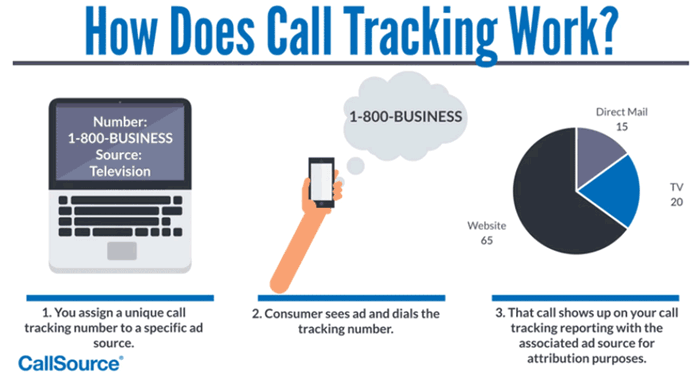
Source: CallSource
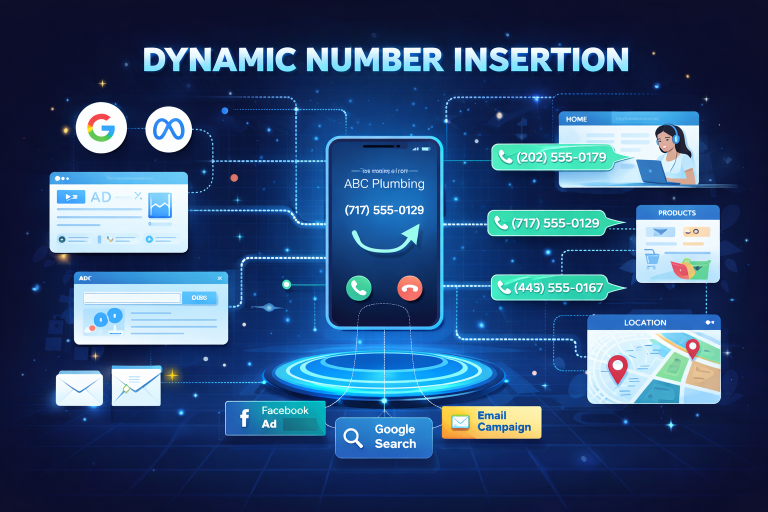
Call tracking can be set up in several ways. One common method is using dedicated numbers for specific channels, such as one number for paid search and another for a local landing page. Another is website-based call tracking, where the number shown on the site changes depending on how the visitor arrived. Google also supports call conversion measurement for calls from ads, calls from website visits, and uploaded call conversions.
Once the system is active, call tracking analytics lets you review metrics that go beyond simple call volume. Google’s reporting includes details such as call duration, start and end time, caller area code, missed or received status, and whether the call connected. That makes call tracking useful not just for attribution, but also for judging lead quality and campaign efficiency.
Why businesses use call tracking
The biggest benefit of call tracking is clearer attribution. This is why call tracking for marketing teams is not just about call volume, but about attribution and optimization. If you run multiple campaigns, publish several landing pages, or invest in SEO and PPC at the same time, call tracking helps show which efforts are producing real phone leads. That gives marketers a stronger basis for budget allocation and campaign optimization. Google explicitly supports counting calls of a chosen duration as conversions so advertisers can optimize toward more valuable calls rather than raw volume alone.
It also helps improve lead quality analysis. A short missed call and a five-minute qualified sales conversation should not be treated the same way. By measuring duration and other call details, teams can build better rules for what counts as a meaningful lead. Google’s help documentation specifically notes that advertisers can define calls of a specified duration as conversions.
Another benefit is better operational visibility. When teams can see where calls are coming from, what times they arrive, and which campaigns create the strongest responses, they can improve staffing, routing, and budget timing. In practice, call tracking analytics becomes more powerful when it is connected with ad platforms, analytics, and CRM workflows rather than used as a standalone reporting tool.
Popular call tracking software brands include CallRail, Invoca, CallTrackingMetrics, Ringba, and Phonexa, each offering different strengths in attribution, analytics, routing, and campaign optimization.
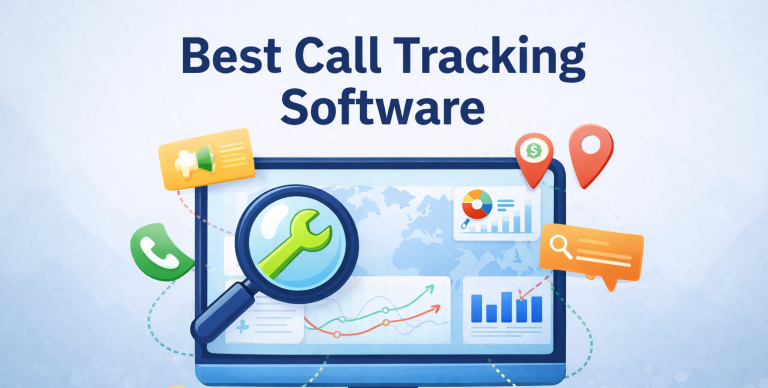
Read the full article about Best Call Tracking Software.
Call tracking vs. call recording vs. call analytics
These terms are often mixed together, but they are not identical. Call tracking focuses on attribution: where the call came from. Call recording stores the conversation itself. Call analytics goes further by analyzing patterns, outcomes, and performance signals from calls. A business may use call tracking without recording calls, and it may use recording without having a strong attribution setup. Keeping those distinctions clear helps teams choose the right tools and stay focused on the data they actually need. The official Google Ads guidance is centered on measurement and conversion reporting rather than conversation storage itself.
Best practices for call tracking
Start with a clear conversion definition. Not every call should count as success. Many businesses set a minimum duration threshold or import qualified offline outcomes so that reporting reflects genuine leads, not wrong numbers or accidental taps. Google supports both duration-based call conversions and uploaded call conversion workflows.
Use source-level or campaign-level number assignment where it makes sense. The goal is to preserve attribution accuracy without creating unnecessary complexity. If everything points to one static number, channel visibility becomes weak. If every possible variation gets its own setup without a plan, reporting becomes messy. A structured attribution model is more useful than a large but confusing pool of numbers. Google’s examples consistently frame call reporting around campaign and ad performance measurement.
Integrate call data with the rest of your marketing stack. Call tracking is most valuable when it informs bidding, landing page testing, budget decisions, and sales follow-up. Google Ads supports using call conversions in automated bidding, which shows how call data can influence optimization rather than sitting in a separate report.
Review compliance before you expand into recording, telemarketing, or automated call workflows. The FTC says the Telemarketing Sales Rule sets disclosure requirements, prohibits misrepresentations, limits certain calling practices, and supports consumer protections, while the FCC explains that the TCPA restricts telemarketing calls and certain automated dialing or prerecorded voice uses.
Common mistakes to avoid
One common mistake is tracking only call volume. A campaign that generates many low-quality calls may look strong on the surface but perform poorly in revenue terms. Measuring qualified calls, booked appointments, or closed sales produces a much better picture. Google’s conversion setup options are designed to help advertisers distinguish valuable calls from generic activity.
Businesses that rely on call tracking marketing workflows should connect call data with CRM and ad platform reporting.
Another mistake is failing to connect website call tracking with ad measurement. If your business relies on both click-based conversions and phone leads, you need visibility across both paths. Google specifically supports calls from website visits as a conversion type, which is important for businesses whose customers research online and then call instead of filling out a form.
A third mistake is treating call tracking as a one-time setup. Attribution models, channel mix, landing pages, and compliance expectations all change. The setup should be reviewed regularly to make sure the numbers, routing, and conversion definitions still match how the business actually acquires leads.
FAQ
Is call tracking only for Google Ads?
No. Google Ads has official call reporting and phone call conversion tracking features, but the broader concept applies across SEO, paid social, landing pages, directories, email, and offline campaigns. Google’s documentation is simply one of the clearest official examples of how phone attribution can work.
Can call tracking help measure lead quality?
Yes. Call tracking can help by showing call duration, connection status, timing, and source data. When paired with CRM outcomes or offline conversion uploads, it becomes much more useful for measuring which campaigns generate qualified leads instead of just call volume.
Is call tracking legal?
Call tracking itself is a measurement method, but related practices such as telemarketing, prerecorded calls, automated dialing, and recording require compliance review. The FTC and FCC both publish official guidance that businesses should review before deploying those workflows.